
Homemade biscuits are a staple in classic baking, valued for their soft interiors and buttery flavor. This easy biscuit recipe focuses on simple ingredients and proper technique to produce fluffy biscuits with consistent rise.
Cold butter is essential to creating tender layers. As the biscuits bake, the butter melts and creates steam, resulting in a light, flaky structure. Gentle handling ensures the dough remains soft rather than dense.
These buttery biscuits are versatile and can be served with both sweet and savory dishes. They’re suitable for breakfast, brunch, or dinner and pair well with a wide range of toppings.
Because this recipe is approachable, it’s well suited for beginners while still producing bakery-quality results.
Homemade biscuits are a staple in classic baking, valued for their soft interiors and buttery flavor. This easy biscuit recipe focuses on simple ingredients and proper technique to produce fluffy biscuits with consistent rise. While biscuits may seem straightforward, small details in preparation play a major role in achieving the ideal texture.
One of the defining characteristics of fluffy biscuits is their layered structure. Unlike yeast breads, biscuits rely on cold fat and chemical leavening to rise. When handled correctly, the dough creates distinct layers that separate during baking, resulting in a tender crumb rather than a dense interior. This balance is what sets homemade biscuits apart from store-bought alternatives.
This easy biscuit recipe is designed to be dependable. Using pantry staples allows the ingredients to work together naturally, without unnecessary additions. The simplicity of the recipe also makes it easier to repeat successfully, which is why homemade biscuits are often one of the first baking recipes people master.
Technique matters just as much as ingredients when making buttery biscuits. Overworking the dough can compress the layers and limit rise, while gentle handling preserves air pockets that expand in the oven. Keeping ingredients cold helps control the spread and ensures the biscuits bake upward instead of outward.
Because biscuits bake quickly, they’re an excellent choice when time is limited but a homemade result is still desired. From mixing to baking, the entire process fits easily into a short window, making this recipe practical for busy mornings or last-minute meals.
Homemade biscuits are incredibly versatile. Their neutral, buttery flavor allows them to pair well with both sweet and savory toppings. Whether served alongside breakfast dishes or as part of a hearty dinner, fluffy biscuits adapt easily to different menus without requiring changes to the base recipe.
Another advantage of this easy biscuit recipe is consistency. When measured accurately and mixed with care, the dough behaves predictably, producing evenly baked biscuits with a soft interior and lightly golden exterior. This reliability makes the recipe especially appealing for beginners who want confidence-building results.
Because biscuits do not require long resting or rising times, they are forgiving compared to other baked goods. Small variations in shape or thickness rarely affect the final outcome, which adds to their appeal as an everyday baking option.
Substitutions and Variations
This homemade biscuits recipe can be adapted in several ways without compromising texture or rise. The following substitutions and variations allow flexibility while preserving the core structure of the biscuits.
Dairy Substitutions
Buttermilk provides tenderness and flavor, but regular milk combined with a small amount of acid works just as well. Plain yogurt thinned with milk can also be used to maintain moisture and softness. These options help replicate the acidity needed for proper leavening.
Butter Alternatives
Unsalted butter produces the most classic flavor, but plant-based butter can be used for a dairy-free option. When substituting, choose a firm variety designed for baking to maintain structure and prevent excessive spreading.
Flour Variations
A portion of the all-purpose flour can be replaced with whole wheat flour for a heartier biscuit. This substitution adds a slightly nutty flavor and denser crumb, while still producing a tender result when mixed gently.
Sweet Biscuit Variations
For a lightly sweet version, brush the tops with melted butter and a touch of honey after baking. These biscuits can also be used as a base for desserts such as strawberry shortcake or served with fruit and whipped cream.
Savory Biscuit Variations
Add finely chopped herbs, shredded cheese, or cracked black pepper to the dough for savory biscuits. These variations pair well with soups, stews, or breakfast dishes without altering the baking method.
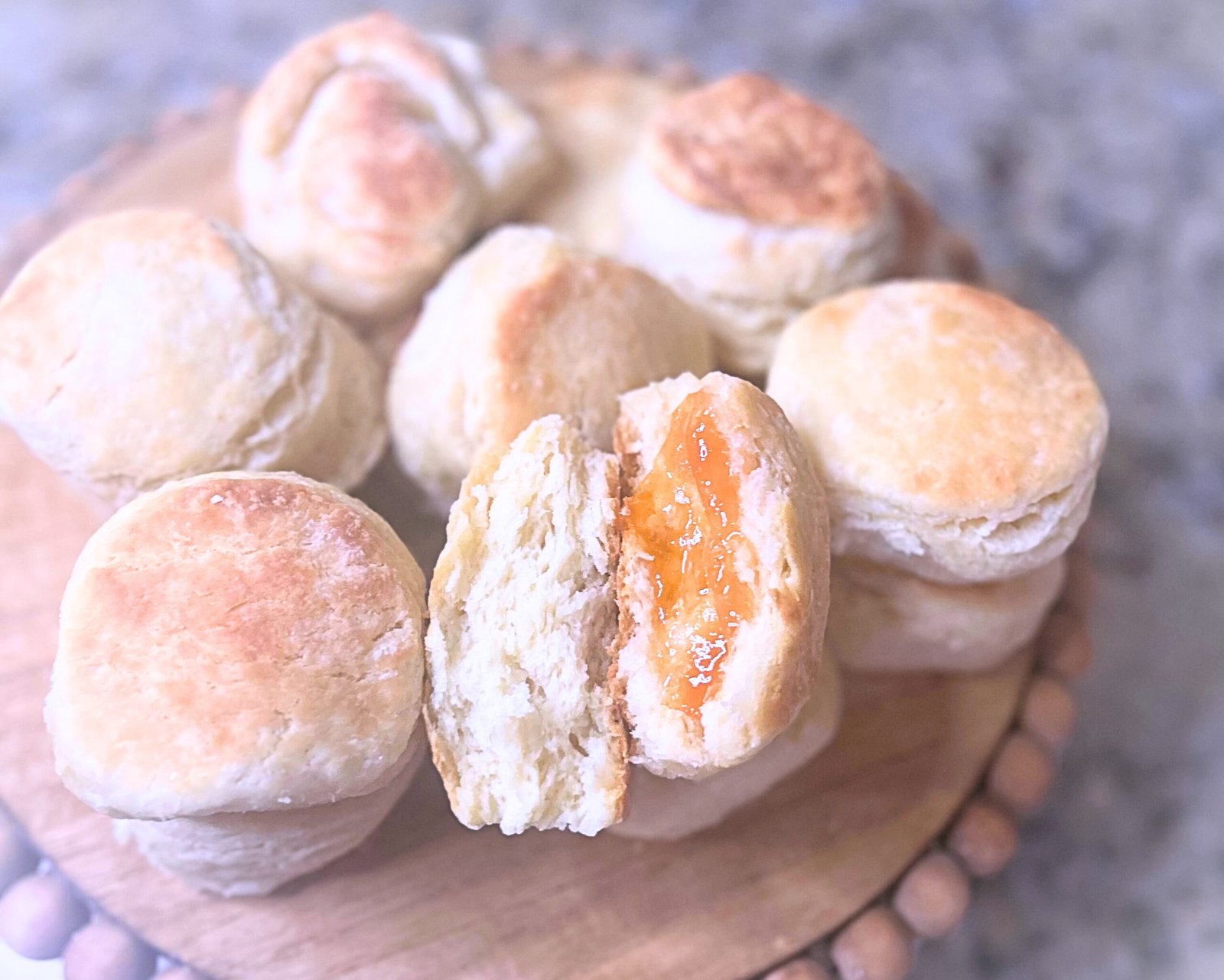
Homemade Biscuits (Soft, Fluffy and Buttery)
Ingredients
Equipment
Method
- Make the Biscuit Dough
- Preheat your oven to 425°F (220°C). Line a baking sheet with parchment paper.
- In a large bowl, whisk together the flour, baking powder, sugar, and salt until evenly combined.
- Using a box grater, grate the frozen butter directly into the dry ingredients (this creates extra fluffy layers).
- Use a fork or pastry cutter to gently mix the butter into the flour until it looks like coarse crumbs.
- Pour in the cold milk and stir until a soft dough forms—do not overmix.
- Turn the dough out onto a lightly floured surface.
- Gently pat and fold the dough over itself 3–4 times (this creates flaky layers).
- Pat the dough into a 1-inch thick rectangle and use a biscuit cutter or glass to cut out biscuits.
- Place biscuits on the baking sheet, close together for softer sides or spaced apart for crispier edges.
- Bake
- Bake for 12–15 minutes, or until the tops are golden brown.
- Brush warm biscuits with melted butter (optional but delicious).
- Serve hot with butter, honey, jam, or your favorite breakfast sides.
Notes
- Cold ingredients are essential: Keep your butter frozen and your milk very cold until ready to use. Cold butter creates steam as the biscuits bake, which helps form flaky layers.
- Avoid overmixing: Mix the dough just until it comes together. Overworking the dough can compress the layers and lead to tough biscuits instead of a soft, tender texture.
- Fold for layers: Gently folding the dough 3 to 4 times helps build bakery-style layers without deflating the dough.
- Mind the thickness: For tall, fluffy biscuits, roll or pat the dough to about 1 inch thick before cutting.
- Storage: Store leftover biscuits in an airtight container at room temperature for up to 2 days, or refrigerate for up to 5 days.
- Freezing: Unbaked biscuits can be frozen for up to 3 months. Bake directly from frozen, adding 2 to 3 minutes to the baking time.
Homemade biscuits are one of those recipes that quickly become a kitchen staple. Their soft interiors, buttery flavor, and reliable rise make them a dependable choice for both everyday meals and special occasions. Because they pair well with such a wide range of foods, they can be served repeatedly without ever feeling repetitive.
These fluffy biscuits work equally well for breakfast, brunch, or dinner. They can be enjoyed simply on their own or paired with classic accompaniments depending on the meal. This versatility is one of the reasons homemade biscuits remain a cornerstone of traditional baking.
Because this easy biscuit recipe emphasizes technique over complexity, it’s approachable for beginners while still delivering bakery-quality results. Once mastered, it becomes a foundation recipe that can be adapted endlessly, making it one you’ll return to often.
If you’ve made these homemade biscuits, consider leaving a comment and star rating. Your feedback helps other readers discover the recipe and understand how it fits into their own baking routines. If you have questions or serving ideas to share, feel free to join the conversation below.